

Pull-Ups vs Adult Diapers: What Does Medicaid Cover and What’s Best?
How to Select the Right Incontinence Products & Navigate Medicaid Coverage
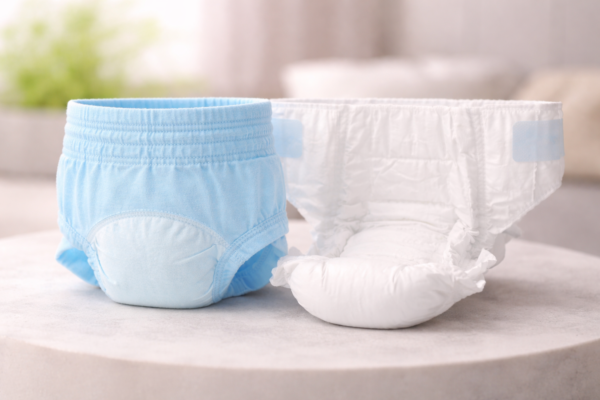
Choosing between pull-ups vs adult diapers isn’t just a small product decision. It can directly impact your comfort, confidence, skin health, and whether incontinence supplies are fully covered through Medicaid.
 Here’s why, unpacking:
- The difference between pull-ups vs adult diapers
- Pull-up sizes vs diaper sizes
- What incontinence product is better?
- Does Medicaid cover pull-ups?
- Does Medicaid cover adult diapers?
- Monthly Medicaid supply limits for pull-ups vs adult diapers
- How to get free pull-ups & adult diapers through Medicaid
- FAQs
To help you access pull-ups and adult diapers through Medicaid in Washington, Oregon, and Idaho, let’s take a closer look at each of these incontinence products, when they may be a good choice, and how Medicaid can influence which supplies you may be eligible to receive for free.
If you need more help from a Medicaid expert, contact MyMedSupplies. We can verify eligibility and guide you through the process.
Pull-Ups vs Adult Diapers: What’s the Difference?
 Both pull-ups and adult diapers are absorbent incontinence products designed to help manage bladder or bowel leakage in distinct ways:
- Pull-ups resemble traditional underwear and are designed to be pulled on and off.
- Adult diapers (often called tab-style or tape diapers) include adjustable fasteners that connect around the sides of the waist, allowing caregivers or wearers to secure the product snugly.
Comparison Overview: Pull-Ups vs Adult Diapers
Pull-ups and adult diapers typically differ in structure and intended use cases. Understanding the key distinctions can help you determine which product may better support your comfort, mobility, and protection needs.
| Feature | Pull-Ups | Adult Diapers (Tab-Style) |
|---|---|---|
| Design | Worn like underwear | Adjustable tabs for secure fit |
| Best for | Active individuals | Individuals with limited mobility or who require caregiver assistance |
| Absorbency levels | Light to moderate | Moderate to heavy |
| Ease of changing | Step-in design | Can be changed while lying down |
| Adjustability | Elastic waistband | Refastenable tabs |
| Discretion under clothing | Often very discreet | Slightly bulkier, depending on absorbency level |
| Overnight use | May be suitable for light leakage | Often preferred for reliable overnight protection |
| Caregiver assistance | May be more difficult to change | Typically easier for caregivers |
| Fit flexibility | Based on waist or hip sizing | Adjustable tabs allow for a customized fit |
| Mobility considerations | Designed for walking users | More suitable for bed-bound individuals |
| Common terminology | Protective underwear | Tab-style briefs |
When deemed medically necessary, both pull-ups and adult diapers may be covered by Medicaid in Washington, Oregon, and Idaho
Need help getting reliable access to Medicaid pull-ups and/or adult diapers? MyMedSupplies is here to help.
Pull-Up vs Tape Diaper: Key Functional Differences
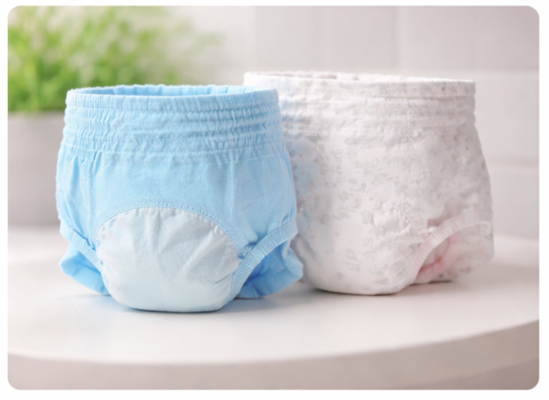
When comparing a pull-up vs. a tape diaper, lifestyle and mobility usually determine which option will work best.
Notably, pull-ups may be preferable for:
- Active adults
- Individuals transitioning from pediatric to adult sizes
- Those seeking a more underwear-like feel
- Daytime use with moderate leakage.
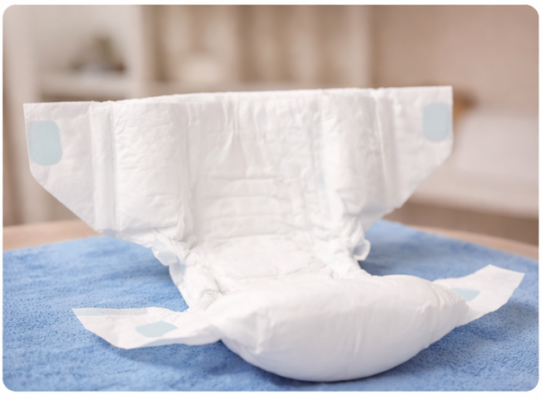 Alternatively, tape-style adult diapers may be better suited for:
- Overnight protection
- Individuals with limited mobility
- Caregivers assisting with changes
- Heavier bladder or bowel incontinence.
Healthcare providers often recommend tape diapers when frequent adjustments or higher absorbency levels are needed.
Pull Up Size vs Diaper Size: How Sizing Compares
Sizing varies slightly with pull-ups vs adult diapers because each product has a unique design and construction. In fact, while pull-ups rely more heavily on waist and hip measurements, tab diapers tend to offer more flexibility due to their adjustable fasteners.
General Sizing Considerations
|
✔Pull-ups typically follow waist measurement ranges.
|
✔Adult diapers accommodate a wider range of body shapes.
|
|
✔Tab diapers allow micro-adjustments for comfort.
|
✔Some individuals may wear different sizes across different product types.
|
|
✔Proper sizing is important to prevent leakage, skin irritation, or discomfort.
|
|
Which Incontinence Product Is Better for Different Needs?
Don’t assume one product is universally “better.” Instead, take a moment to evaluate a few practical considerations that often influence which option may work best for your situation. Asking the following questions can help clarify whether pull-ups or adult diapers may be a better option for you.
▾ How often are changes needed during the day?
Individuals who require frequent changes may benefit from a product that balances absorbency with convenience. If changes are minimal due to minor or moderate leakage, pull-ups may be better than adult diapers.
▾ Will changes be self-managed or caregiver-assisted?
The level of independence involved in daily routines can influence which design is easier to use consistently. If caregivers will be doing the changes, tape diapers can be a more ideal choice.
▾ Is overnight protection an important factor?
Longer wear times may require the higher absorbency and additional leakage protection available with adult diapers.
▾ Is discretion under clothing a priority?
Some individuals prioritize a lower-profile product for work, social activities, or school environments. When this is the case, pull-ups may be preferred, even if more frequent changes are needed.
▾ Has a healthcare provider recommended a specific product type?
Medicaid coverage decisions often hinge on:
- Medical necessity
- Prescriptions written by authorized healthcare professionals
So, if clinical documentation specifies pull-ups over adult diapers (or vice versa), those products are more likely to be covered by Medicaid than other incontinence products.
Please be aware that prescriptions for incontinence products may specify that both pull-ups and adult diapers are required. When that’s the case, the quantities needed each month should also be detailed on the prescription.
▾ Are there skin sensitivity or comfort considerations?
Product fit, breathability, and change frequency can all influence skin health over time.
Evaluating these factors can help narrow down which product may best support skin health and comfort.
Need help selecting covered incontinence supplies? MyMedSupplies can explain your options and the next steps.
Does Medicaid Cover Pull-Ups?
 Yes. Coverage rules vary slightly by state, but Washington Apple Health, Oregon Health Plan (OHP), and Idaho Medicaid generally cover pull-ups when:
- The individual has a qualifying medical condition.
- Documentation of medical necessity is provided.
- The individual meets the age requirements.
- The quantity requested is consistent with medical need.
- The individual has a prescription for the exact type and amount of pull-ups required every month.
Healthcare providers often determine whether pull-ups vs adult diapers are most appropriate based on diagnosis and level of need. If someone requires more pull-ups than Medicaid programs allow (i.e., the need exceeds the monthly limits), healthcare providers can submit a prior authorization.
Does Medicaid Cover Adult Diapers?
 Yes. Medicaid diaper programs commonly include coverage for adult diapers when medically necessary. In fact, adult diapers may be approved when:
- There’s a diagnosis associated with urinary or bowel incontinence, like dementia.
- Moderate to heavy incontinence is documented.
- Mobility limitations require caregiver assistance.
- Overnight incontinence protection is needed.
- Individuals have a prescription for adult diapers, noting the amount required each month.
With Medicaid diaper programs, please be aware that:
- Prescriptions for Medicaid diapers are only good for one year. After that, individuals usually need to obtain a new prescription and submit that to Medicaid.
- As incontinence and diaper needs evolve, prescriptions may need to change. When that occurs, visit a healthcare professional first. Then, contact an approved Medicaid supply provider like MyMedSupplies. We can get updated documentation to Medicaid ASAP, so you don’t lose access to the supplies you need.
Monthly Medicaid Supply Limits for Pull-Ups vs Adult Diapers (WA, OR, ID)
Medicaid coverage for incontinence supplies in Washington, Oregon, and Idaho generally falls within established quantity guidelines.
While exact amounts vary based on clinical need, most Medicaid diaper programs group pull-ups and adult diapers into the same category of “absorbent products.” That means total quantities are typically calculated as a combined monthly allowance rather than separate limits for diapers vs pull-ups.
Typical Monthly Quantity Ranges
The table below breaks down the typical monthly limits for pull-ups and adult diapers across Washington Apple Health, Oregon Health Plan (OHP), and Idaho Medicaid.
| State | Combined Pull-Ups + Adult Diapers per Month | Notes |
|---|---|---|
| Washington | ~150–200 combined | Higher quantities possible with prior authorization |
| Oregon | Up to 200 combined | Defined in OAR 410-122-0630 |
| Idaho | Varies by prescription | Quantity based on medical necessity documentation |
Coverage amounts in the table above are maximums. With that, the actual amount of approved products for each month can depend on:
- An individual’s diagnosis
- The severity of the symptoms
- Prescriptions and physician recommendations
- Medicaid program guidelines
How to Get Free Pull-Ups & Adult Diapers Through Medicaid
Whether you need pull-ups or adult diapers, the process for obtaining covered incontinence supplies through Medicaid is generally the same.
Both products fall under the category of “medically necessary absorbent supplies.” So, approval typically depends on clinical documentation, rather than the specific product style requested.
 With that, the steps to access pull-ups or adult diapers through Medicaid generally include:
- Getting a medical evaluation: A healthcare provider evaluates symptoms and determines whether incontinence supplies are medically necessary, based on recent or current diagnoses.
- Obtaining a prescription or Letter of Medical Necessity: Documentation may specify the required product type(s), absorbency level, and estimated monthly quantity.
- Verifying Medicaid eligibility: Coverage is confirmed through Washington Apple Health, Oregon Health Plan (OHP), or Idaho Medicaid.
- Submitting the proper paperwork: Required forms are submitted to ensure compliance with Medicaid documentation guidelines.
- Connecting with an approved supplier: Once approved, many individuals receive ongoing deliveries from an approved supplier, like MyMedSupplies, to maintain consistent access to pull-ups and/or adult diapers.
MyMedSupplies works with individuals and caregivers throughout Washington, Oregon, and Idaho to simplify the process, coordinate documentation, and ensure reliable monthly delivery of covered incontinence supplies.
Ready to get started? Complete the New Customer form or contact MyMedSupplies to verify eligibility.
FAQs About Medicaid Pull-Ups and Adult Diaper Coverage
Choosing between pull-ups and adult diapers can raise questions about eligibility, requirements, and coverage details.
The following FAQs address additional considerations that may help you navigate the Medicaid diaper program, understand approval timelines, and figure out how to access the most appropriate supplies for your needs.
▾ Will Medicaid cover both pull-ups and adult diapers?
Yes but not always. In some cases, Medicaid may approve different product types when medically justified. Coverage decisions depend on documentation and individual needs.
▾ How long does it take to get approved for Medicaid incontinence supplies?
Approval timelines vary, but many applications are processed within a few weeks once all required documentation is submitted.
▾ What should I do if Medicaid denies coverage?
Denials may occur due to incomplete documentation or missing medical necessity details. Providers may resubmit updated documentation or request reconsideration in these cases.
There may also be the opportunity to appeal Medicaid’s decision if denials are issued after all required documentation has been provided.
▾ Can product types be changed after approval?
Yes. If your product needs change:
- Talk to your healthcare provider ASAP.
- Your healthcare provider can recommend adjustments and issue a new prescription with updated medical documentation.
- This updated documentation will need to be submitted to Medicaid.
Choosing the Right Product & Navigating Medicaid Coverage

Understanding the difference between pull-up vs diaper products can support more informed decisions, as well as greater comfort, dignity, and peace of mind day to day. While both options may be covered under Medicaid diaper programs, ultimately:
- The right choice depends on several factors.
- Your needs, as well as what Medicaid covers, can change over time.
The good news is that you don’t have to navigate this alone.
MyMedSupplies helps individuals through the process, from verifying eligibility to getting monthly deliveries discreetly and consistently.
Contact MyMedSupplies today to get started.
Explore More Medicaid Tips & Insights
Pull-Ups vs Adult Diapers: What Does Medicaid Cover and What’s Best?
How to Select the Right Incontinence Products & Navigate Medicaid Coverage Choosing between pull-ups vs...
Mar

Does Medicaid Cover Incontinence Supplies for Dementia or Alzheimer’s Patients?
Bowel and urinary incontinence are not uncommon with Alzheimer’s disease and dementia diagnoses. That can...
Feb

What If Medicaid Denies My Request for Incontinence Supplies?
Medicaid denials for incontinence supplies can be discouraging, especially when you or someone you care...
Jan

November Is Bladder Health Awareness Month
Summary November is Bladder Health Awareness Month, spotlighting common bladder issues like incontinence, UTIs, and...
Oct

Can I Get Free Adult Diapers with Washington Apple Care?
Summary Washington Apple Health (Medicaid) does cover free adult diapers, but eligibility depends on medical...
Oct
Do I Need a Prescription to Get Free Diapers Through Medicaid?
Summary Medicaid in Washington, Oregon, and Idaho requires a prescription for free incontinence supplies, including...
Oct

All About Postpartum Incontinence: Causes, Solutions & Expert Advice
Summary Postpartum incontinence affects about 1 in 3 women after childbirth, often caused by pelvic...
Oct

When to See a Doctor for Urinary Incontinence
Summary Urinary incontinence affects about 25 million Americans, yet it remains under-discussed, leaving many to...
Oct

Why the Bathroom Is the #1 Hotspot for Falls
Bathrooms may be small, but they’re packed with risk. From slippery surfaces to hard fixtures...
Sep